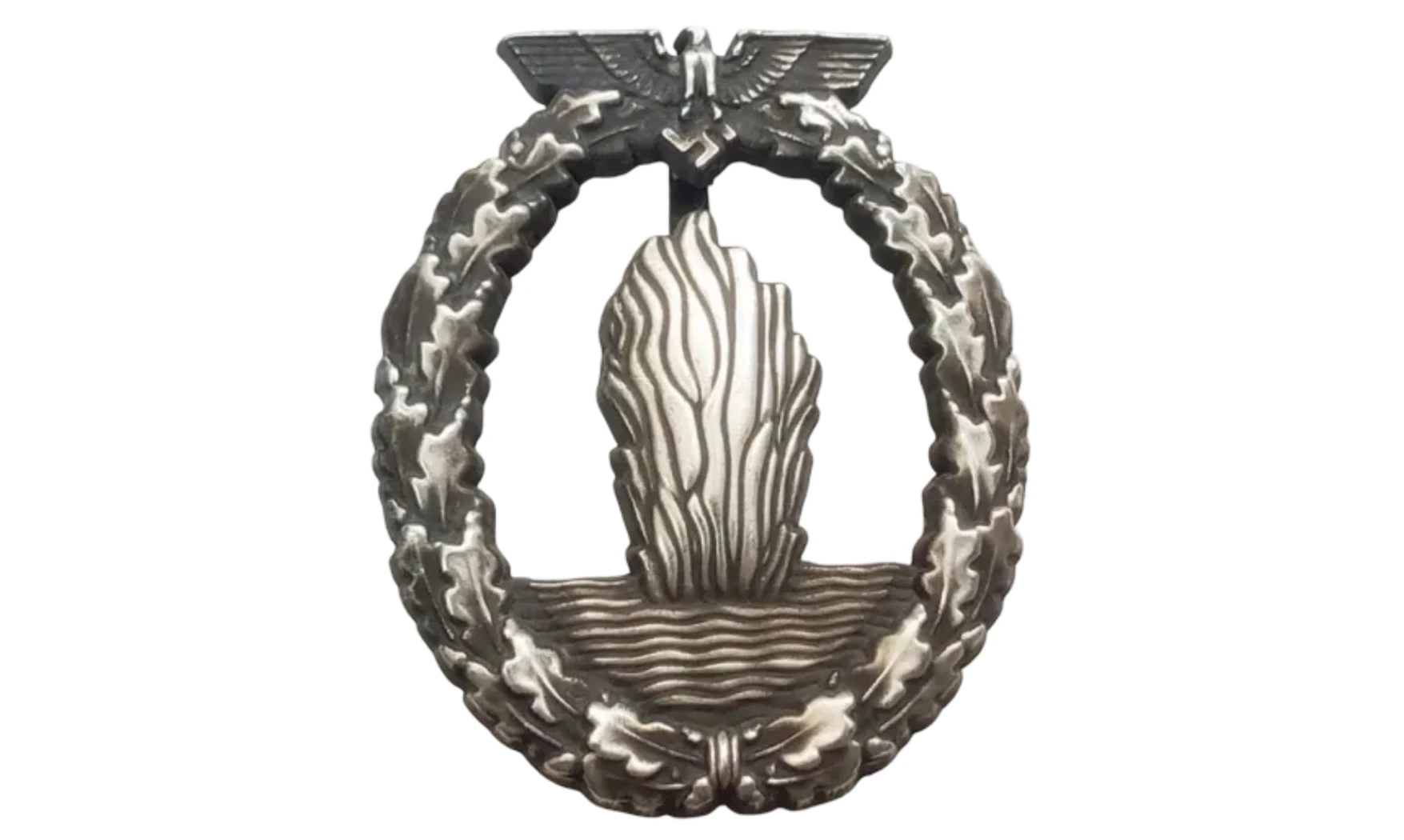
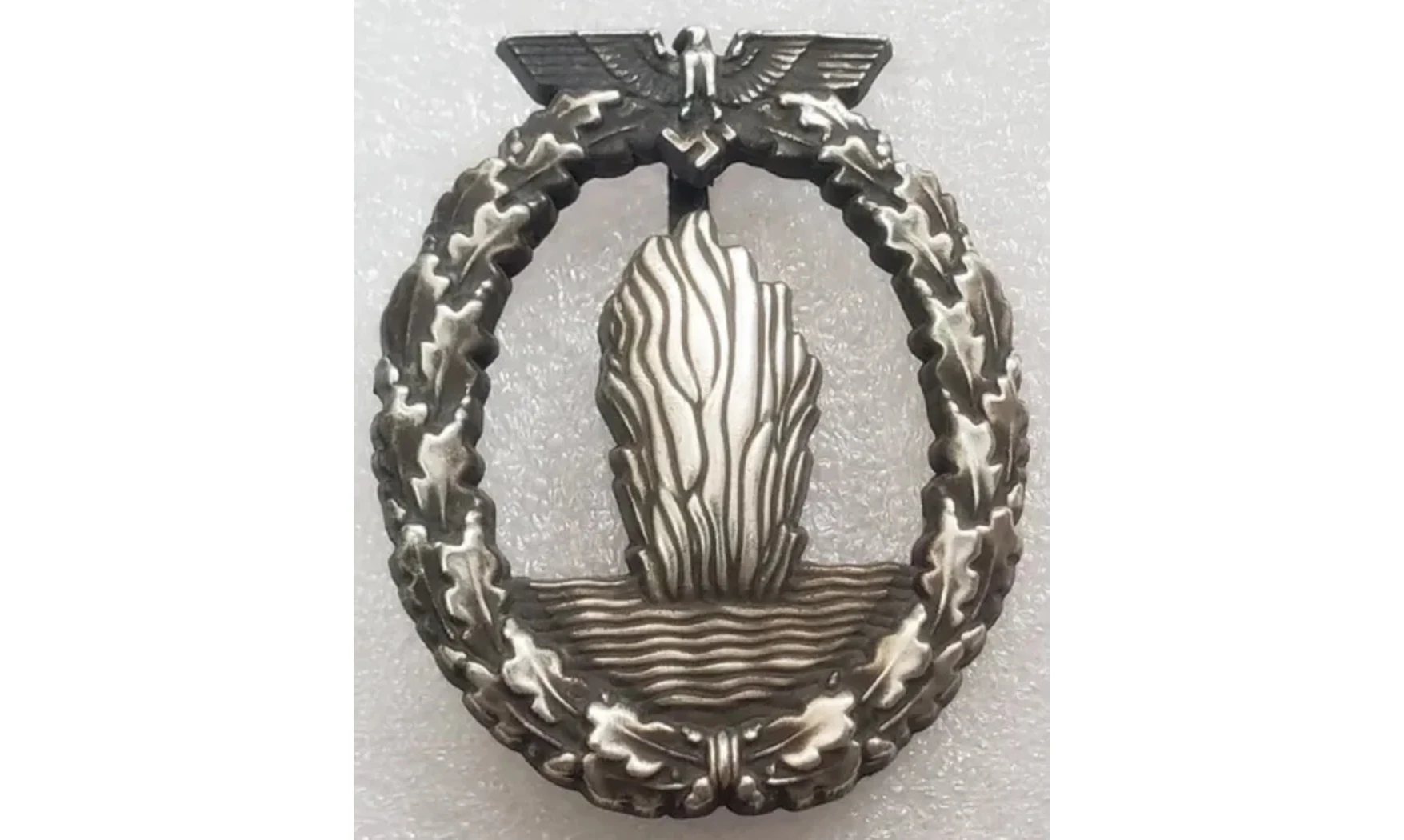
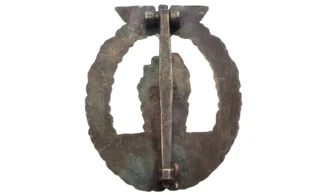
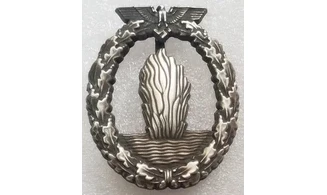
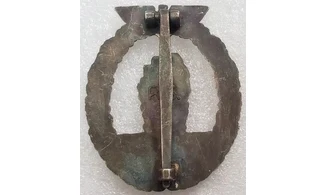
Reproduction of the Kriegsmarine Minesweeper insignia.
Old silver finish.
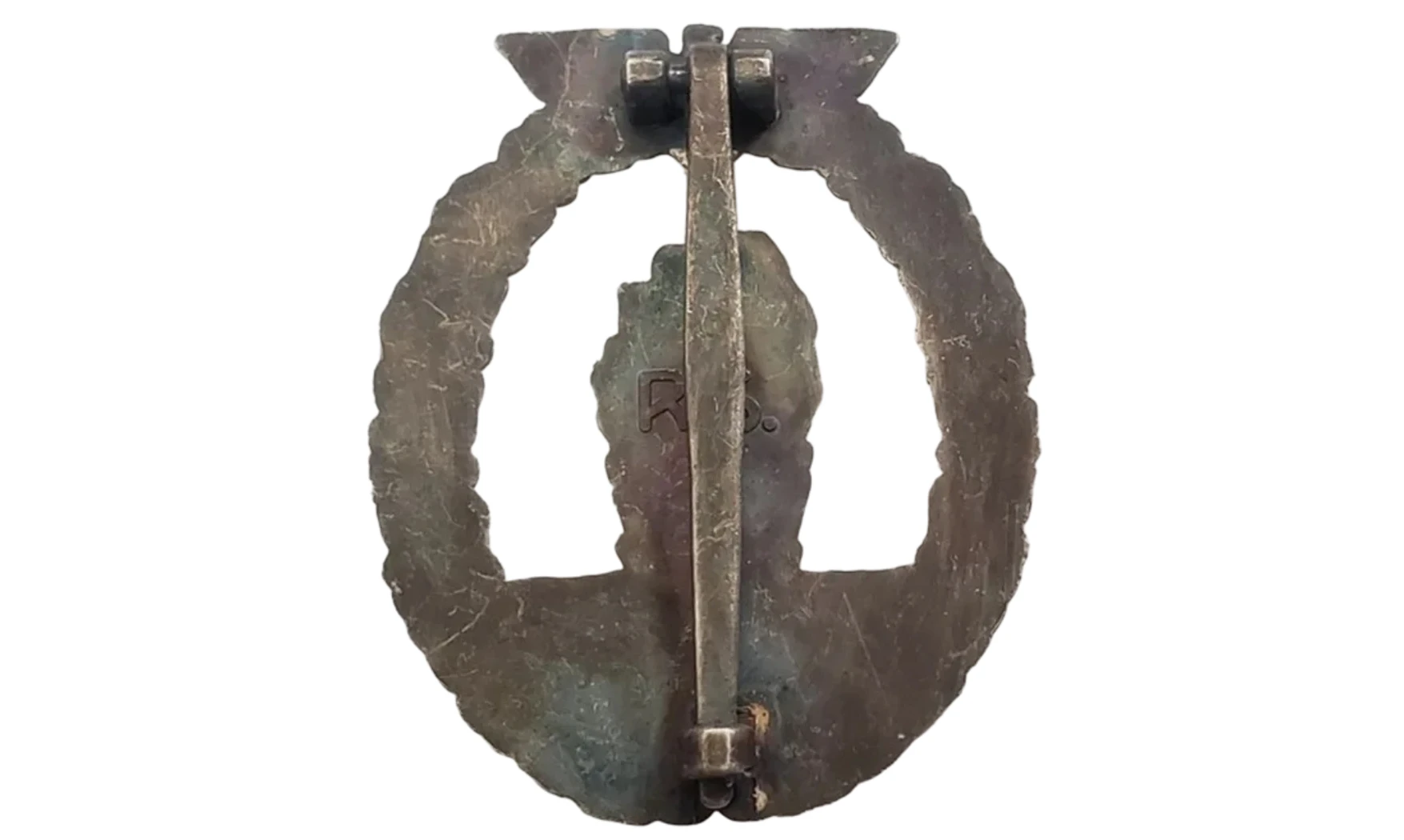
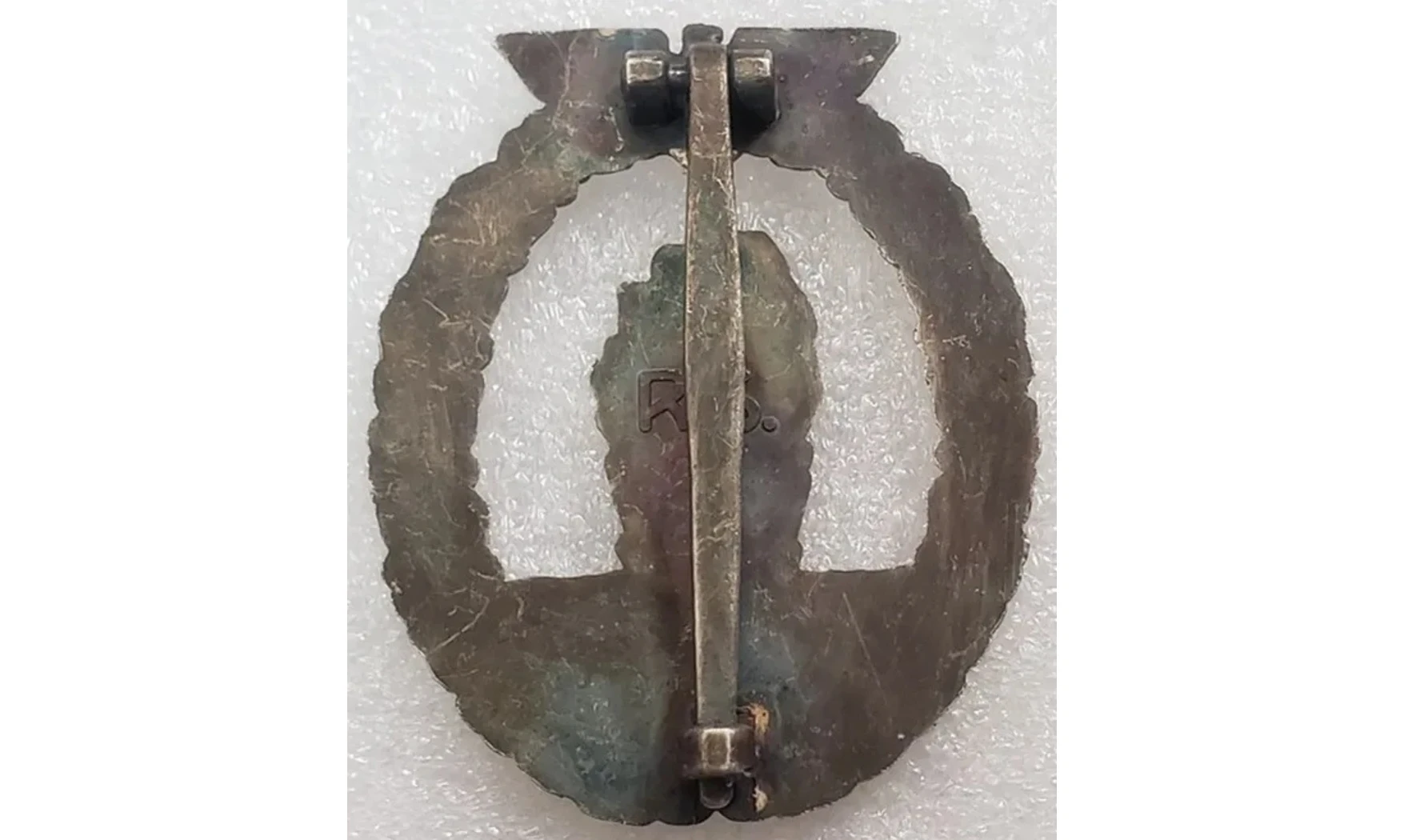
Attachment on back.
Manufacturer's markings.
High-quality craftsmanship.
Made in the Philippines.
Registered postage included.
The battle badge for minesweepers, submarine hunters and escorts, (German: Kriegsabzeichen für Minensuch-, U-Boot-Jagd- und Sicherungsverbände), is a German military decoration of the Third Reich. It was created on August 31, 1940 by Admiral Raeder to reward personnel working on mine-sweepers, submarine hunters and escorts.
To obtain the badge, the following conditions had to be met:
Participation in at least 3 operational missions on one of the types of vessel concerned.
Or to have been wounded during a mission.
Or to have taken part in a successful mission.
Or to have seen his boat sunk.
Or have completed 6 months of service.
Or taken part in a dangerous mine-laying mission.
Or 25 days of escort duty.
The badge was designed by Otto Placzek of Berlin, who drew his inspiration from a photograph published in 1940 in Fahrten und Flüge gegen England.
It consists of a wreath of oak leaves surmounted by an eagle, wings outstretched and holding between its talons a small swastika protruding slightly from the wreath. The attachment at the bottom of the wreath resembles two ribbons.
The central motif represents a spray of silver water rising from the waves, symbolizing the explosion of a mine.
Diplomas for this badge can take a variety of forms, with or without the national emblems.
The badge was to be worn on the left side of the jacket under the iron cross, if present.
Old silver finish.
Attachment on back.
Manufacturer's markings.
High-quality craftsmanship.
Made in the Philippines.
Registered postage included.
The battle badge for minesweepers, submarine hunters and escorts, (German: Kriegsabzeichen für Minensuch-, U-Boot-Jagd- und Sicherungsverbände), is a German military decoration of the Third Reich. It was created on August 31, 1940 by Admiral Raeder to reward personnel working on mine-sweepers, submarine hunters and escorts.
To obtain the badge, the following conditions had to be met:
Participation in at least 3 operational missions on one of the types of vessel concerned.
Or to have been wounded during a mission.
Or to have taken part in a successful mission.
Or to have seen his boat sunk.
Or have completed 6 months of service.
Or taken part in a dangerous mine-laying mission.
Or 25 days of escort duty.
The badge was designed by Otto Placzek of Berlin, who drew his inspiration from a photograph published in 1940 in Fahrten und Flüge gegen England.
It consists of a wreath of oak leaves surmounted by an eagle, wings outstretched and holding between its talons a small swastika protruding slightly from the wreath. The attachment at the bottom of the wreath resembles two ribbons.
The central motif represents a spray of silver water rising from the waves, symbolizing the explosion of a mine.
Diplomas for this badge can take a variety of forms, with or without the national emblems.
The badge was to be worn on the left side of the jacket under the iron cross, if present.